Introduction
This is my personal journal to capture my investment thinking and philosophy. It has the added benefit of holding my thinking and actions accountable to someone other than myself. I am less likely to make bad investment decisions or suffer poor analysis if others are watching!
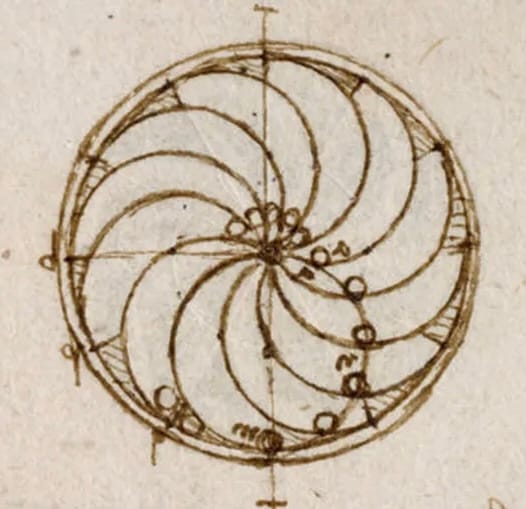
I opted for the name Perpetual Motion as a reminder to what good investing should look like: your capital grows constantly, with no effort on your part, from the decisions of people you do not know, forever. It isn't a financing round or a fund or a trade or a pitch. It is a true perpetual motion machine in action.
I think it makes sense to first level-set on what I believe so you know what to expect.
1) Investing is long-term by nature. Short-term returns are determined by factors, positioning, flows and narrative. Long-term returns are determined by business fundamentals.
2) Importantly, long-term investing does not mean a rigid long-term holding period. Low turnover is an output of good analysis that is constantly verified. It is a means to an end. When the world is more volatile, turnover should naturally be expected to increase. Mr. Market is a tool to be used to your advantage.
3) Either directly or indirectly, a business is worth the cash flows it can distribute to its owners from now until judgement day, discounted back to the present at some hurdle rate.
4) Relatedly, changes in the things that drive those cash flows—margins, capital intensity, growth and competitive advantage period—is the battleground of the fundamental analyst. Every piece of analysis or news should be tied to this, else it is noise. Most stuff is noise.
5) The future is extremely unknowable. Conviction is overrated, humility is underrated and only the paranoid survive.
6) Therefore, look for more ways to win even when wrong. Heads I win, tails I don‘t lose too much. Emphasis on things like diversification, demanding a high margin of safety or focusing on businesses with a uniquely defensible competitive positioning.
7) Risk is the permanent impairment of capital. High valuations and expectations, a shoddy industry structure, weak or even corrupt management, government meddling are the risks, not price volatility.
8) Always expand your circle of competence, as the world changes in ways you never expect. Nothing is too hard or off limits. Knowledge compounds.
9) Simple is usually best. There are no style points.
10) Finally, compounding capital at high rates for the long-term is a tool. It is valuable only for what it enables: charity, family, freedom, community safety and relationships. That is the ultimate prize.